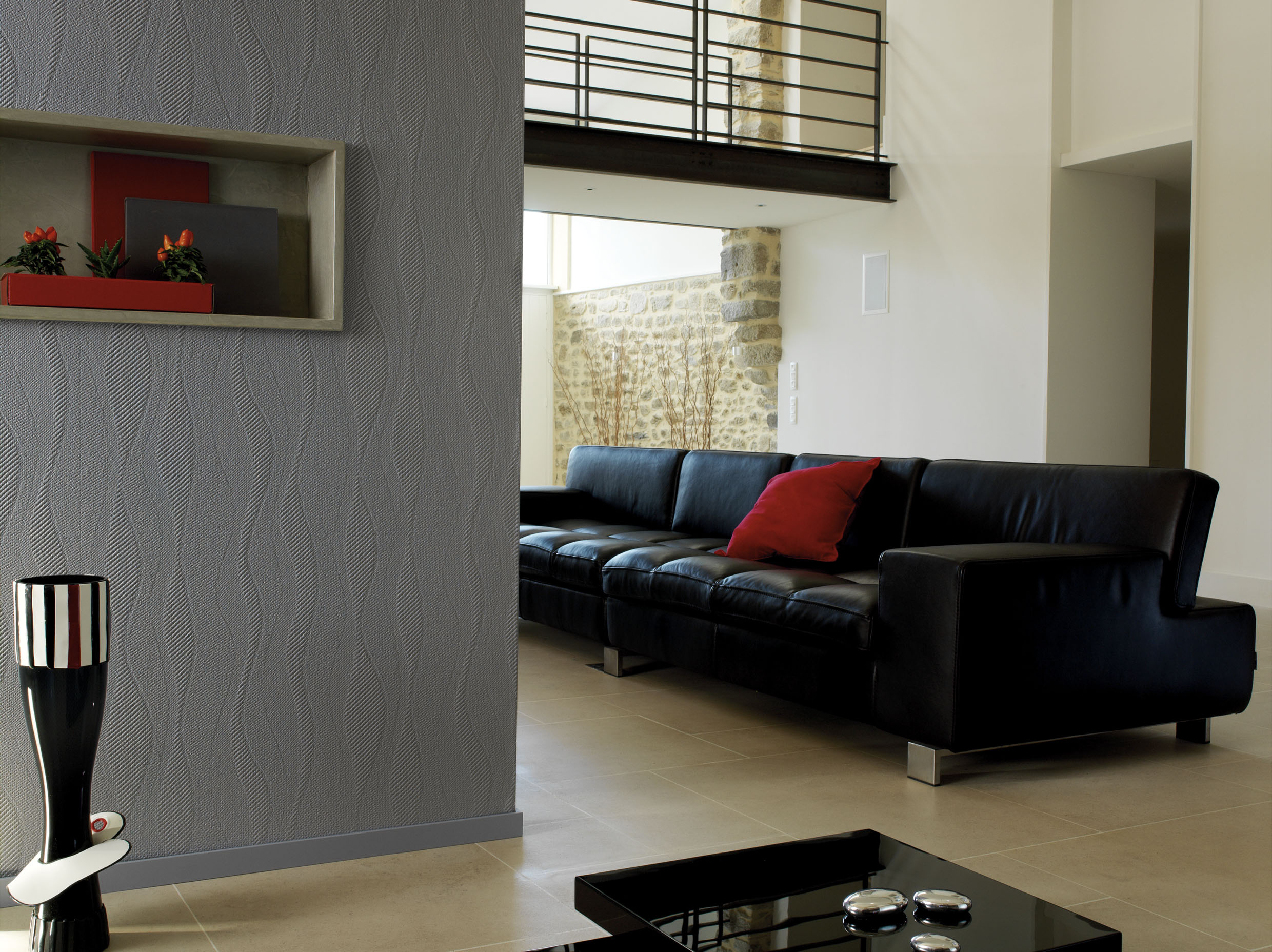
Cover 4,500 Sq Ft in a Day: Fast, Low-Cost Wall Reinforcement for New Builds and Rehab
Novelio Classic Easyglue offers contractors and renovators a fast, durable solution for wall renovation projects. Featuring a homogeneous, water-activated glue film on the back, these decorative, impact-resistant panels eliminate the need for separate adhesive and enable up to 50% application time savings. When used in a 75 sq ft room, this wallcovering also cuts material waste—saving approximately 2 gallons of glue and, if pre-painted, 2 gallons of paint. The result is a washable, re-paintable surface that resists abrasion, prevents hairline cracks, and seamlessly covers existing wall imperfections. Professionals reduce labor costs and accelerate installation time without compromising on aesthetics or performance. The Easyglue glass textile wall covering option further streamlines projects, delivering up to 30–50% faster installation compared to traditional methods. Whether renovating aging drywall or installing new impact-resistant wall panels, the wallcovering's combination of crack prevention, abrasion resistance, and long-lasting durability makes it an ideal choice for efficient, cost-effective wall finishes.
Roos International
Marketing Coordinator
June 17, 2025
0 minute read
Reinforce, Renovate, and Save: The Fast, Affordable Wallcovering Solution for Contractors
When you’re a contractor working on affordable-housing projects—whether it’s new HUD homes or renovating an aging complex—every dollar and every hour counts. Traditional drywall repairs often involve patching, skim-coating, priming, and then painting. But what if you could skip most of that prep work, deliver a rock-solid wall finish, and move through three units (about 4,500 sq ft of wall) in a single day?
Enter pre-pasted, pre-primed glass textile wallcoverings by Novelio. Designed to reinforce existing drywall and provide a durable, crack-resistant substrate, this “wall restoration” system installs rapidly, cuts labor costs by one-third or more, and makes life easier on every job site. Below, we’ll cover why this is the ideal solution for contractors tackling affordable housing—new builds or rehabs—and how quick and simple it is to install enough wallcovering to finish up to 4,500 sq ft per day.
Why Glass Textile Wallcoverings Belong in Affordable Housing
Reinforces Rather Than Replaces
Traditional drywall repair often means cutting out damaged sections, re-framing, mudding, sanding, and then repainting. With glass textile wallcovering, you skip all that demolition. The glass-textile mat can adhere directly over existing drywall (even if it has minor cracks, dents, or old vinyl coverings). In short: a stronger surface, no drywall tear-out.
Long life cycle: Once installed and painted, wallcovering last for decades—no need to replace every 5–7 years like standard painted drywall. For HUD or other affordable units, that’s a game-changer in lifecycle costs.
Ideal for Both New Builds and Renovations
New homes: Before your crew even frames out, you can specify glass textile wallcovering on common areas, kitchens, and hallways to prevent inevitable dents, dings, and seam cracks. Instead of worrying about hairline cracks that pop up in sheetrock joints, you deliver a consistent, reinforced finish from Day 1.
Renovations (HUD rehabs): Many older public-housing properties have worn, cracked, or even mold-prone walls. Instead of grinding off old surfaces or tearing down paneling, crews simply prime, paste, and embed the glass textile over “problem” walls. It’s a fast renovation that guards against future cracking and mold—critical in high-moisture climates.
Breathable & Mold-Resistant
Because the textile mat is vapor-permeable, walls “breathe” instead of trapping moisture behind paint or vinyl. Combine it with a mildew-resistant acrylic or epoxy topcoat, and you dramatically reduce mold risk—a major benefit in HUD developments, seniors’ residences, or any high-humidity region.
Affordable, Low Lifecycle Cost
U.S. Contractors typically pay a small premium for a roll of pre-pasted wallcovering versus standard drywall materials—but you save on labor (no joint compound, less sanding, fewer “touch-ups”), and you avoid future replacement cycles. Over ten years, those savings really add up.
Installation Is Shockingly Simple (4500 sq ft Per Day!)
One of the biggest selling points for contractors is just how quickly a small crew can transform a unit. With a standard “pull-through” pasting machine and basic tools, you can cover roughly 3 units (4,500 sq ft of wall) in a single 8 × 10 hour workday. Here’s how:
Ensure walls are clean, dry, and free of loose paint or dust.
Apply a standard pre-wallcovering primer (one coat only)
Key point: There's no need to patch every crack; most fine cracks simply get bridged by the fiberglass mat.
Set Temperature & Environment
Make sure ambient temperature is above 88 °C (45 °F).
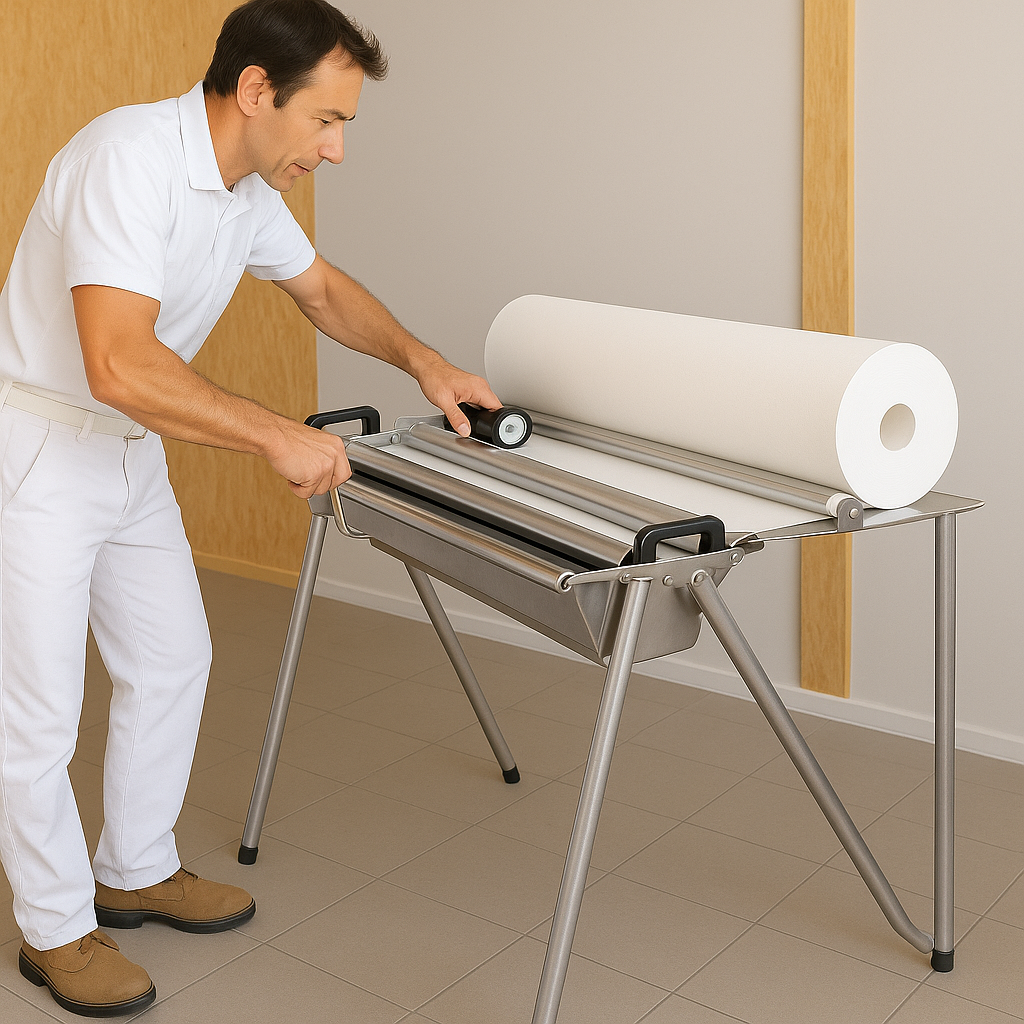
Set up your pasting table; these tables hold the roll and let you wet/activate the pre-pasted backing with water or a mild wetting solution.
Step 2: Measure & Cut
Cut to Height + 10cm
Pull the roll through the wetting machine, then cut each strip to wall height plus about 4″ (10 cm).
You’ll generally be working with 1 m-wide rolls (≈3.28 ft)—which is plenty to cover a standard residential wall in one vertical panel (no seams every 12″).
Keep Strips on the Table, Ready to Hang
As soon as a strip is cut, it’s already wet and fully “activated” with adhesive.
Line up multiple strips on the pasting table so your installer can lift, align, and hang without a second roll-pasting step at each strip.
Step 3: Hang Pre-Pasted Wallcovering
Place Panel Vertically
Position the top of the panel slightly above the ceiling line (allowing for trim), then let it unroll downward. Use chalk lines or a laser line to ensure perfect plumb.
Gently smooth with a plastic smoother from top to bottom, pushing out air pockets and aligning the vertical edge.
Butt-Join (No Overlap)
Place the next strip edge-to-edge, aligning any pattern repeat (if your wallcovering is textured).
Because the product is pre-pasted and pre-primed, joints remain invisible once painted.
Step 4: Trim & Finish
Trim Excess
After smoothing each panel, simply run a sharp utility knife (guided by a straightedge) along the baseboard line. Trim above door or window casings as needed.
Wait ~24 hours for drying before painting
Allow the installed fabric to dry for roughly 24 hours (it will be completely secured by the pre-pasted adhesive).
Roll on one coat of acrylic paint; for darker colors or high-traffic areas, apply a second coat.
Result: A fully reinforced, impact-resistant wall that resists scuffs, dents, and cracks.
Productivity & Labor Savings in Real Numbers
Cover 4,500 sq ft/day
A two-person crew (one at the pasting machine, one hanging & smoothing) can install about 8 rolls per hour—each roll covers roughly 50 m² (≈538 sq ft).
In an 8 hour day, that’s 64 rolls × 538 sq ft per roll ≈ 34,400 sq ft total hanging capacity. Realistically, once you factor in measuring, trimming, and paint prep, you average about 4,500 sq ft of wallcovering per day—enough for three 1,500 sq ft apartments (or one large common hallway, two units, etc.).
30%-50% Application Time Savings
Standard vinyl-backed wallcoverings require one person to paste each strip, wait 5–10 minutes for “book time,” then head back to hang. With Novelio® Classic’s pre-pasted backing, there’s no separate “book.” You simply pull through, cut, and hang—saving roughly 30% on wallcovering application time.
If you opt for the pre-primed version, you avoid one entire priming step—pushing total time savings above 50%.
Less Labor Intensive, Less Preperation
Rather than juggling framers, drywall hangers, tapers, sanders, and painters, you only need your wallcovering crew: one person runs the machine and cuts to size, the other hangs each strip. Typically, that’s two installers + one painter instead of four-five separate drywall trades.
Reduced "Touch-Ups"
Once glass textile is embedded, it virtually eliminates hairline cracks, pop-outs, or paint bubbling. Landlords and property managers call you back much less frequently for touch-ups—a huge bonus when managing dozens of units.
Best Practices & Tips for Contractors
Order Ample Rolls & Plan Your Workflow
Each 50 m × 1 m roll (≈538 sq ft) will cover between two to three average rooms (depending on ceiling height). Keep your crew moving by staging rolls in the pasting area 2–3 at a time.
Factor in 24 hours for drying before paint—coordinate with your painting subcontractor so they can pick up immediately the next morning.
Prep Walls Efficiently
Focus on eliminating loose paint, grease, or dust. Deep gouges or large holes should be skim-coated, but minor cracks and nail pops can be left alone—the glass textile weave bridges them.
Use a high-bond primer (preferably one recommended by the wallcovering manufacturer) to ensure maximum adhesion. If you choose pre-primed wallcovering, you can often skip a separate primer step entirely—paint goes directly over the installed fabric.
Measure Twice; Cut Once
Accurate alignment is everything. A laser line or chalk line should guide the first strip. Once that is plumb, every subsequent 1 m-wide panel will line up seamlessly.
Maintain light, consistent pressure with your smoother—excessive force can thin out the adhesive bond; too light, and you trap air pockets.
Make Time for Painting
Plan to apply your first coat of paint 24 hours after install. In warm, dry conditions, the fiberglass will be fully dry by then. A quick single acrylic coat often looks fine, but budget for a second coat on darker or high-impact areas.
Coordinate your painter’s arrival the next morning so there’s no wasted downtime.
Emphasize Durability in Your Bids
Many HAs and property managers appreciate a line item that says “40-Year Reinforced Wall Finish (with Mold Inhibitor).”
You’re not just hanging another coat of paint—you’re delivering a durable, long-lasting solution that deflects dings, resists mold, and dramatically reduces calls for patching.
Why This Is the Ultimate Affordable-Housing Wall Solution
Speed = Cost Savings: Cover 4,500 sq ft/day, or three units per shift. Labor savings of 30–50% compared to traditional drywall/paint.
Labor Efficiency: Two installers and a paint finish crew vs. a full drywall crew. Fewer tradespeople on site means less coordination, fewer punch-list headaches, and faster turnover.
Long-Term Value: Reinforced fiberglass backing prevents future cracking, peeling, and mold. Your client spends less on repairs—and you get fewer service calls.
Flexibility: Works on new drywall, aging paneling, masonry block, or patched plaster; suitable for ceilings, angles, and stairwells.
Health & Safety: Breathable system reduces moisture buildup, inhibits mold growth, and qualifies for green-building credits (e.g., LEED “Low-Emitting Materials”).
For contractors tasked with tight budgets and even tighter schedules—especially in the affordable-housing or HUD space—pre-pasted, pre-primed fiberglass wallcoverings represent a rare win-win: fast installation, rock-solid durability, and meaningful lifecycle savings. Whether you’re specifying a fresh finish for new units or upgrading cracked, mold-prone walls in an existing development, this system lets you “rip out” costly drywall tear-out and endless skim-coat cycles.
Key takeaway: A small crew can hang and finish 4,500 sq ft of wall in a single day—enough to transform three typical apartment units from shaky drywall to reinforced, long-lasting surfaces. That speed, combined with reduced labor costs (30–50% less application time) and minimal future repair calls, makes fiberglass wallcovering the best solution for affordable housing contractors who need to get in, get out, and leave behind walls that perform for decades.


.jpg)


.png)


.png)


.jpeg)
.png)


.png)