
Architectural Leather Wall Finishes: Dani Leather Acquario, Asolo, and Alfa
By Roos International · · 7 min read

Architectural leather wall finishes bring a tactile, tailored layer to hotel guest rooms, lounges, reception desks, and upholstered feature walls. This guide compares Dani Leather Acquario, Asolo, and Alfa by surface character, color direction, thickness, tested properties, fire-version availability, and fabrication considerations.
Choosing architectural leather wall finishes for hospitality
Dani Leather architectural leather wall finishes give hospitality interiors a material presence that flat printed surfaces cannot reproduce. Used as upholstery over a padded wall build-up or wrapped around millwork, genuine leather can connect headboard walls, banquettes, reception desks, bar fronts, doors, and cabinet faces within one finish palette.
For hotel work, start by separating the visual role of the leather from the construction behind it. Acquario, Asolo, and Alfa are genuine Italian upholstery leather hides suited to upholstered wall panels, headboard walls, wainscoting, furniture, and leather-wrapped fronts. They are materials for a coordinated fabricated assembly, rather than a stated peel-and-stick wall system.
The three collections provide distinct starting points. Acquario is the natural, transparent aniline choice for a surface intended to develop patina. Asolo brings a pronounced pebble grain and two-tone movement. Alfa is a light, very resistant pigmented leather with a smooth hand and the broadest stated color direction of the three.
For architects: Set the finish schedule around the actual assembly: identify the leather collection and color, the upholstered or wrapped application, substrate and backing requirements, seam locations, edge treatment, and the required code documentation. Confirm current dimensions, thickness, fabrication method, installation instructions, lead time, and maintenance guidance with Roos before ordering.
Acquario: smooth aniline leather that develops patina
Dani Leather Acquario is a smooth, full-grain, aniline-dyed leather with a silky, round hand. Its natural, transparent character develops a unique patina as it is used, making it a considered choice where a hotel’s material palette is meant to gain character over time rather than remain visually uniform.
The collection has 9 understated colors, including Polvere, Fango, Grigio, Avio, Cuoio, Marrone, Testa di Moro, and Antracite. This restrained range works well for guest-room headboard walls, upholstered panels, banquettes, and leather-wrapped joinery that should feel connected without becoming a high-contrast feature.
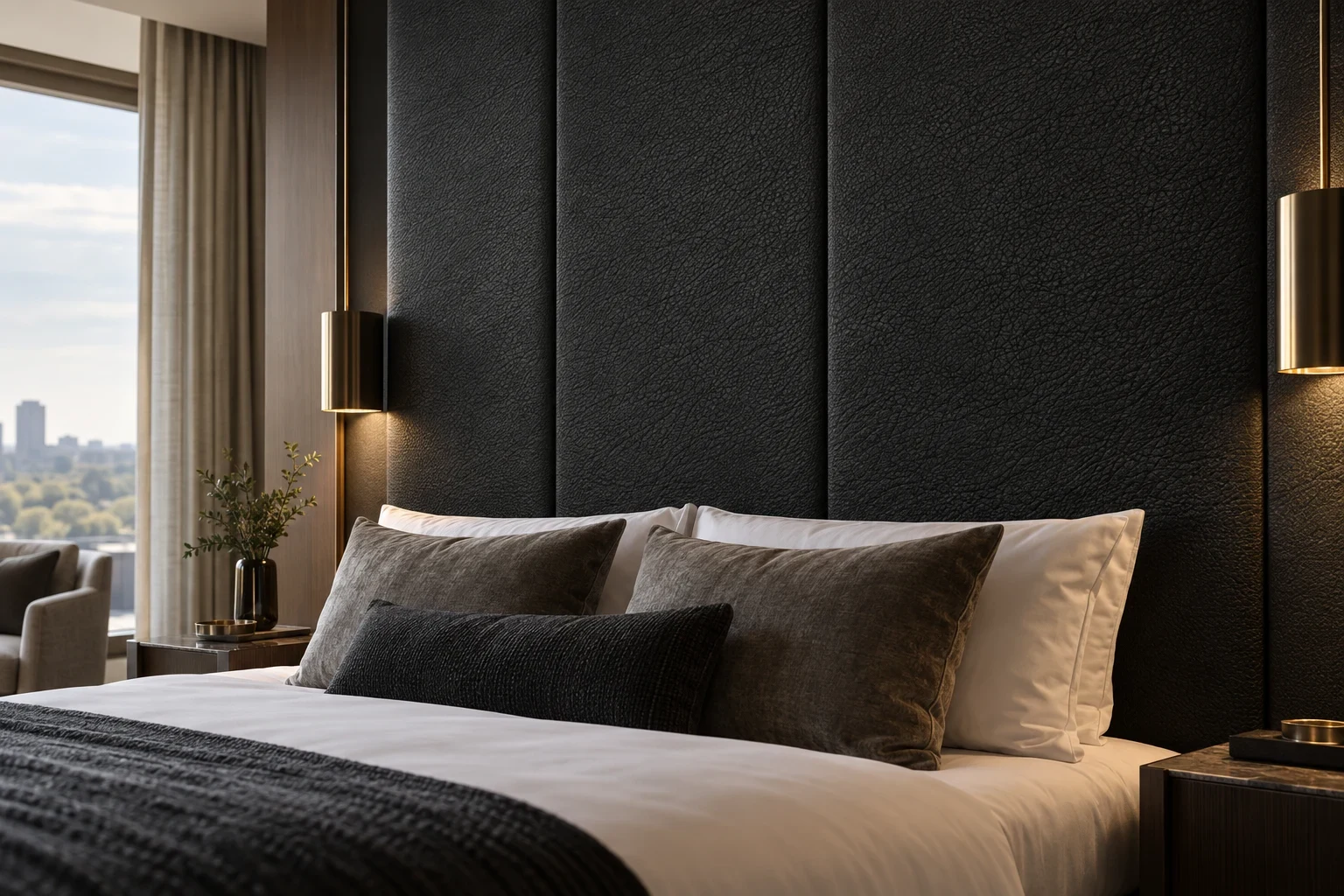
- Material: Leather
- Leather type: Aniline leather
- Thickness: 1.0 - 1.2 mm
- Finish: Aniline, full grain, through-dyed aniline
- Tanning: Chromium salts
- Origin: Made in Italy by DANI
Acquario calls for deliberate sample review because natural material variation, texture, sheen, scale, and the planned lighting all affect the final reading. For a dark option, Acquario Antracite is available; Acquario Avio, Acquario Cuoio, and Acquario Fango show the collection’s cooler, warm, and earthy directions.
For millworkers: For Acquario, review a physical sample under the project lighting and plan the layout before fabrication. Natural, recycled, and batch-produced surfaces may vary, so coordinate seams, transitions, and material direction where multiple pieces meet.
Asolo: pronounced grain and two-tone depth
Dani Leather Asolo has a deep, rounded pebble grain and a two-tone effect that plays light against shadow. In a hotel, that movement gives an upholstered wall or seating surface more visible texture than a smooth leather, while the compact neutral palette keeps suites, corridors, and public spaces within a consistent family.
Asolo’s palette is described as 8 neutrals, from light greige and stone grey through slate grey and taupe to chestnut and dark brown. Its stated applications include upholstered wall panels, headboards, wainscoting, furniture upholstery, and leather-wrapped cabinet fronts, doors, reception desks, and bar fronts.
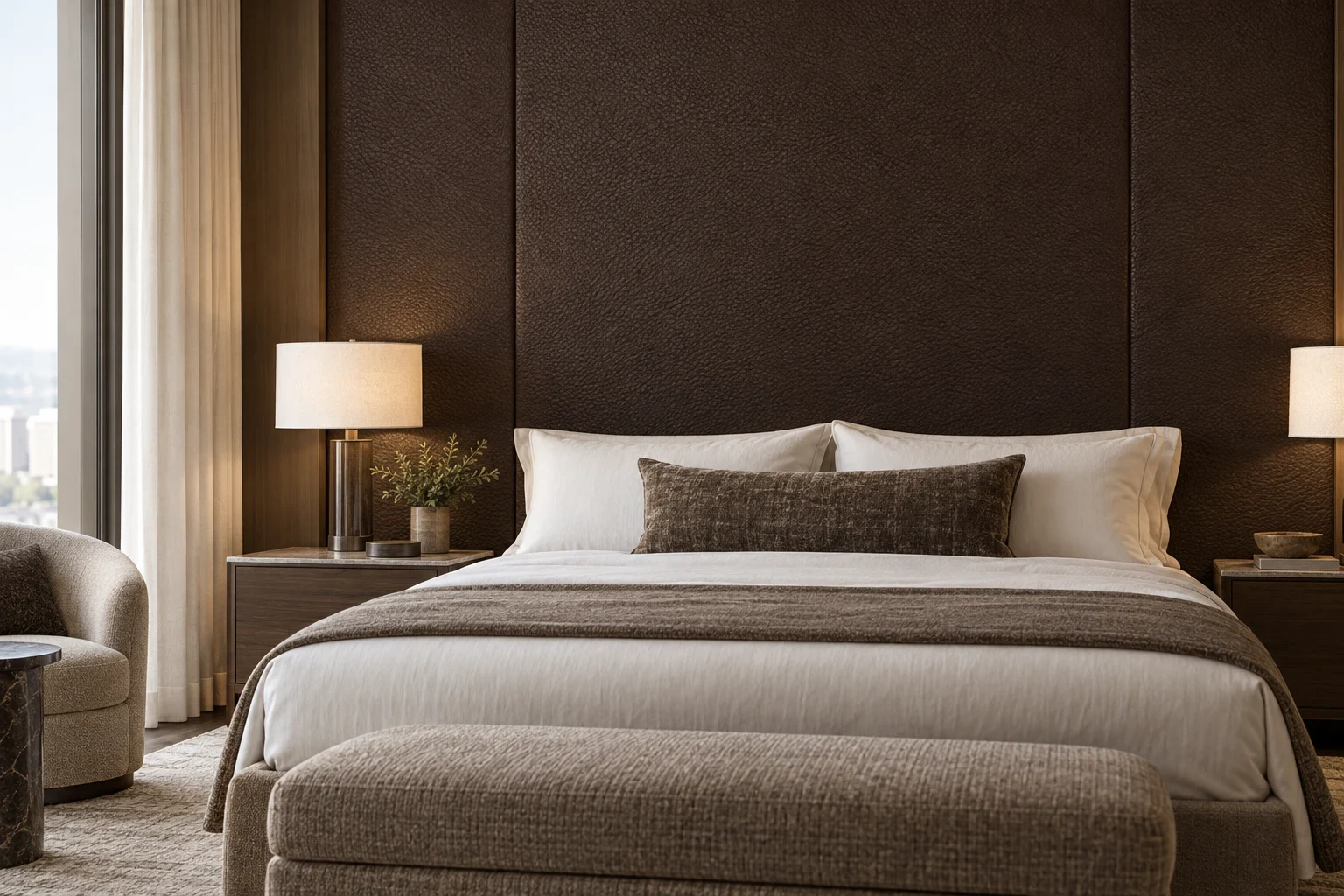
- Material: Leather
- Leather type: Pronounced-grain leather
- Thickness: 1.4 - 1.6 mm
- Finish: Pigmented, corrected grain, through-dyed aniline
- Tanning: Chromium salts
- Fire-rated version: Asolo Fire: flame-retardant, tested to BS 5852 Crib 5 (Dani Leather Fire collection)
The Asolo Technical Sheet documents dry rub fastness of ≥ 4 Grey Scale after 500 cycles, wet rub fastness of ≥ 3/4 Grey Scale after 250 cycles, artificial-light fastness of ≥ 5 Blue Scale, and flex resistance with no cracks. These test results belong to Dani Leather Asolo; the sheet directs teams to consult online tests for technical characteristics of the Fire version.
For architects: Asolo Fire is identified as a flame-retardant version tested to BS 5852 Crib 5 for contract seating. Do not treat that seating test statement as documentation for a wall assembly. Submit the intended application, occupancy, substrate, and authority requirements to Roos when requesting project documentation.
Alfa: smooth pigmented leather with broad color range
Dani Leather Alfa is a light, very resistant pigmented leather with a natural look and silky, smooth hand. It is the collection to consider when a hospitality palette needs clean surface character and more color latitude across upholstery, headboard walls, wrapped fronts, doors, reception desks, and bar fronts.
Alfa is offered in 18 colors, ranging from Bianco Ottico, Latte, and Nocciola through Senape and Fuoco red to Verde Scuro, Blu, Notte, and Nero. That range can support a quiet neutral field in guestrooms or a controlled color accent on tailored public-area upholstery and millwork.
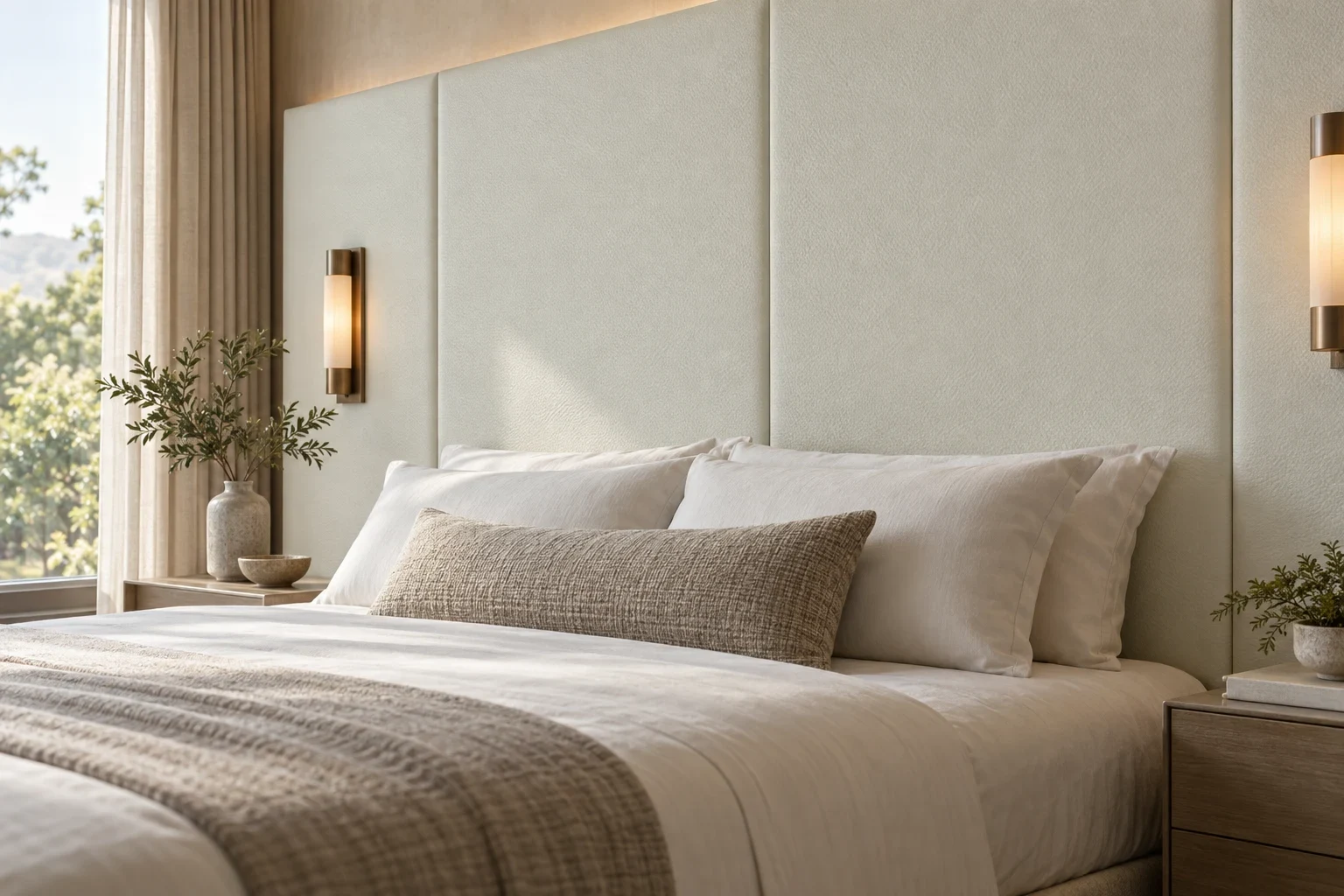
- Material: Leather
- Leather type: Pigmented leather
- Thickness: 0.9 - 1.1 mm
- Finish: Pigmented, corrected grain, through-dyed aniline
- Tanning: Chromium salts
- Fire-rated version: Alfa Fire: flame-retardant, tested to BS 5852 Crib 5 (Dani Leather Fire collection)
The Alfa Technical Sheet reports ≥ 4 Grey Scale dry rub fastness after 500 cycles, ≥ 3/4 Grey Scale wet rub fastness after 250 cycles, ≥ 5 Blue Scale artificial-light fastness, and flex resistance with no cracks. These are Alfa test results, not a substitute for assembly-specific code review or for test information on Alfa Fire.
For readily named color references, Alfa 4000 Latte, Alfa 4020 Nocciola, Alfa 4040 Marrone, Alfa 4060 Senape, and Alfa 4080 Bruciato provide a useful group for initial finish discussions.
How the three leather collections compare
The choice is principally about how the surface should behave visually in the completed interior. Acquario is smooth, natural, and patina-forming. Asolo is the thicker collection listed here, with pronounced grain and a two-tone light-and-shadow effect. Alfa is the smooth pigmented option, described as light and very resistant, with the largest stated color count.
- Choose Acquario for a smooth full-grain aniline surface where patina is part of the design intent.
- Choose Asolo for visible pebble grain, two-tone depth, and a compact neutral palette.
- Choose Alfa for a smooth pigmented finish and a broad palette that includes neutrals, red, green, blue, and black.
All three collections support upholstered wall panels, headboard walls, furniture upholstery, and wrapped millwork applications. Treat the leather selection as one component of a coordinated fabrication package: a mockup can resolve panel proportions, padding, seam positions, returns, trim, lighting, and how the leather relates to adjacent hard surfaces before the guest-room prototype is released.
For project managers: For a renovation, retain approved physical control samples and label them by collection and color. Check material availability when the order is placed: product colors are subject to change, and availability is confirmed at the moment of order.
Fire documentation, care, and wall-assembly coordination
Code compliance begins with the use being evaluated. Interior-finish requirements can limit allowable fire performance and smoke development according to occupancy classification, and code provisions distinguish interior wall and ceiling finishes from decorative materials and trim. A leather upholstery test or Fire version should therefore be reviewed against the specific proposed installation rather than assumed to apply across all wall conditions.
For cleaning and maintenance, the Acquario, Asolo, and Alfa Technical Sheets advise avoiding direct sunlight and direct heat; dusting regularly with a soft, dry cloth; and cleaning spots with a lightly damp cloth and mild soap. Dry immediately after treatment. Do not rub a stain; work gently from the edges toward the center.
For millworkers: Before fabricating a wrapped door, cabinet front, desk, or bar front, confirm the actual leather thickness, substrate compatibility, edge and backing requirements, fabrication method, and approved maintenance plan. Coordinate these details with the project’s millworker and installer before the first production piece.
Order samples and request a project quote
A physical sample is the right next step for comparing Acquario, Asolo, and Alfa. Review color, texture, sheen, scale, and material variation under the lighting planned for the hotel; digital images are useful for initial selection but cannot fully represent the installed material.
Order samples for the collections and colors under consideration, then use the samples alongside upholstery, wood, metal, stone, and paint selections in the project palette. For current availability, technical documentation, fabrication coordination, lead time, and a project quote, contact Roos.
For project managers: Send the intended application, finish schedule, room type, quantity, target installation date, and any required code documentation with the quote request. This gives the team the information needed to coordinate the appropriate material review.
Sources
- CHAPTER 8 INTERIOR FINISHES - 2025 BUILDING CODE OF NEW YORK STATE (2025 BCNYS) (codes.iccsafe.org)
- Leather Makes Everything Better (interiordesign.net)


