
Digital Printed Laminates for Commercial Interiors: Design Range and Specification Guide
By Roos International · · 7 min read

Digital printed laminates for commercial interiors can serve two distinct roles: carrying custom graphics and branding, or bringing a specified decorative pattern to casework and furniture. This guide compares the Lab Designs High Resolution Digital and Abstracts collections by design range, key specification information, and sample-review considerations for workplace projects.
A practical starting point for digital and printed laminate
Digital printed laminates for commercial interiors give workplace teams a way to make built-in surfaces carry more of the project’s identity. Lab Designs offers two useful paths: High Resolution Digital for custom graphics, logos, branding, and unique imagery; and a broad decorative laminate library that includes abstract, woodgrain, metallic, and specialty looks.
For offices, the choice comes down to design intent. A branded reception desk, environmental graphic, or wayfinding element calls for custom imagery. A work café, conference-room credenza, storage wall, or workstation component may call for a repeatable decorative pattern that supports the larger palette without becoming a graphic focal point.
Start by defining the visual role of the surface, its orientation, the fabrication scope, and the areas where the finish must repeat. Then compare physical samples under the project lighting and coordinate the selected pattern and finish with the fabricator before final specification.
For architects: Identify custom-artwork locations separately from decorative-pattern locations in the finish schedule. This keeps branded surfaces, repeat patterns, and finish selections clear for the design team, owner, and fabricator.
Two Lab Designs collections for different kinds of workplace expression
Lab Designs High Resolution Digital is the custom route. It combines high-resolution digital printing with high-pressure laminate for interior surfaces where the project needs graphics, logos, branding, or unique imagery. It is suited to commercial interiors, including corporate environments, feature walls, millwork, wayfinding, branded environments, retail fixtures, and hospitality feature surfaces.
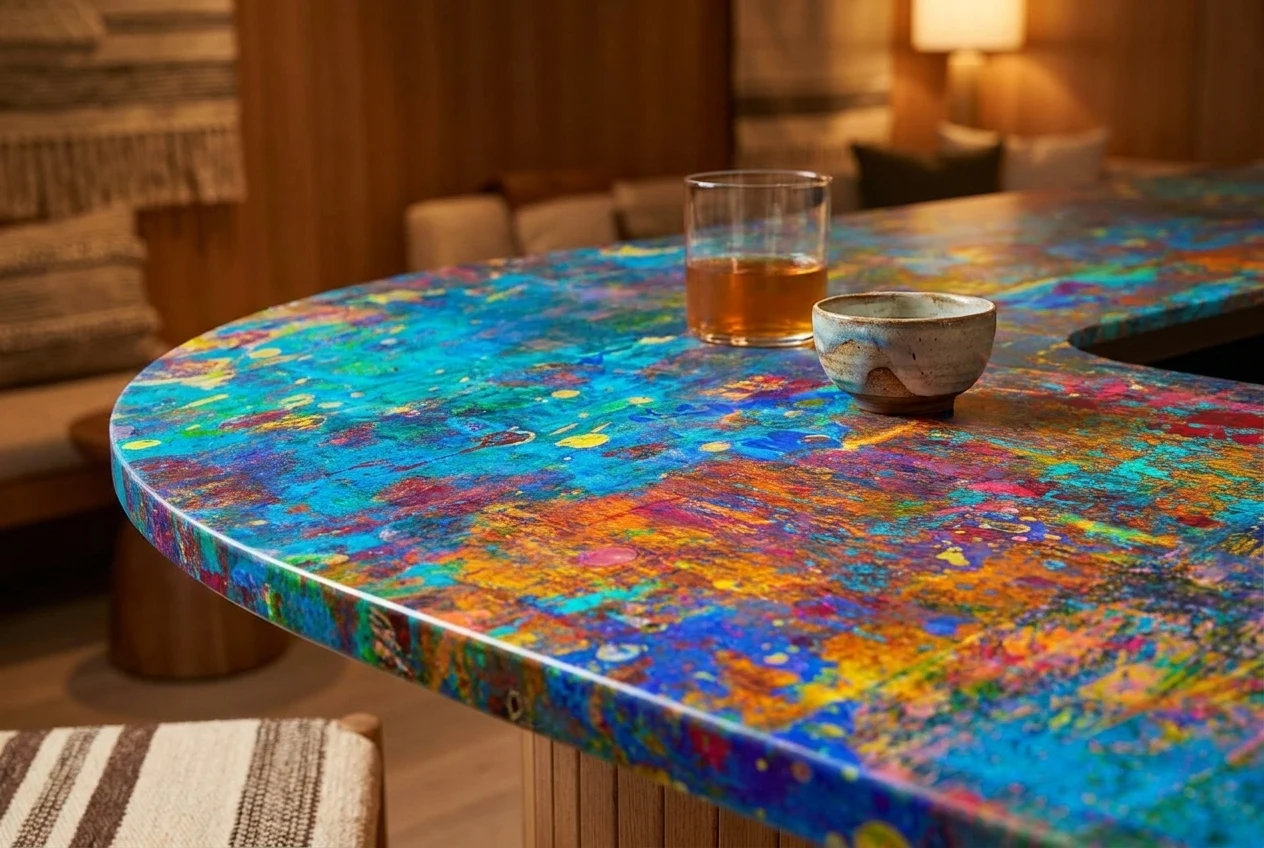
Lab Designs Abstracts is the decorative-pattern route. The collection gathers contemporary high-pressure laminates in abstract, stone, metal, textile, leather, and geometric looks. It is designed for cabinetry, furniture, millwork, casework, reception desks, retail fixtures, hospitality spaces, and workplace desks, storage, conference rooms, and built-ins.
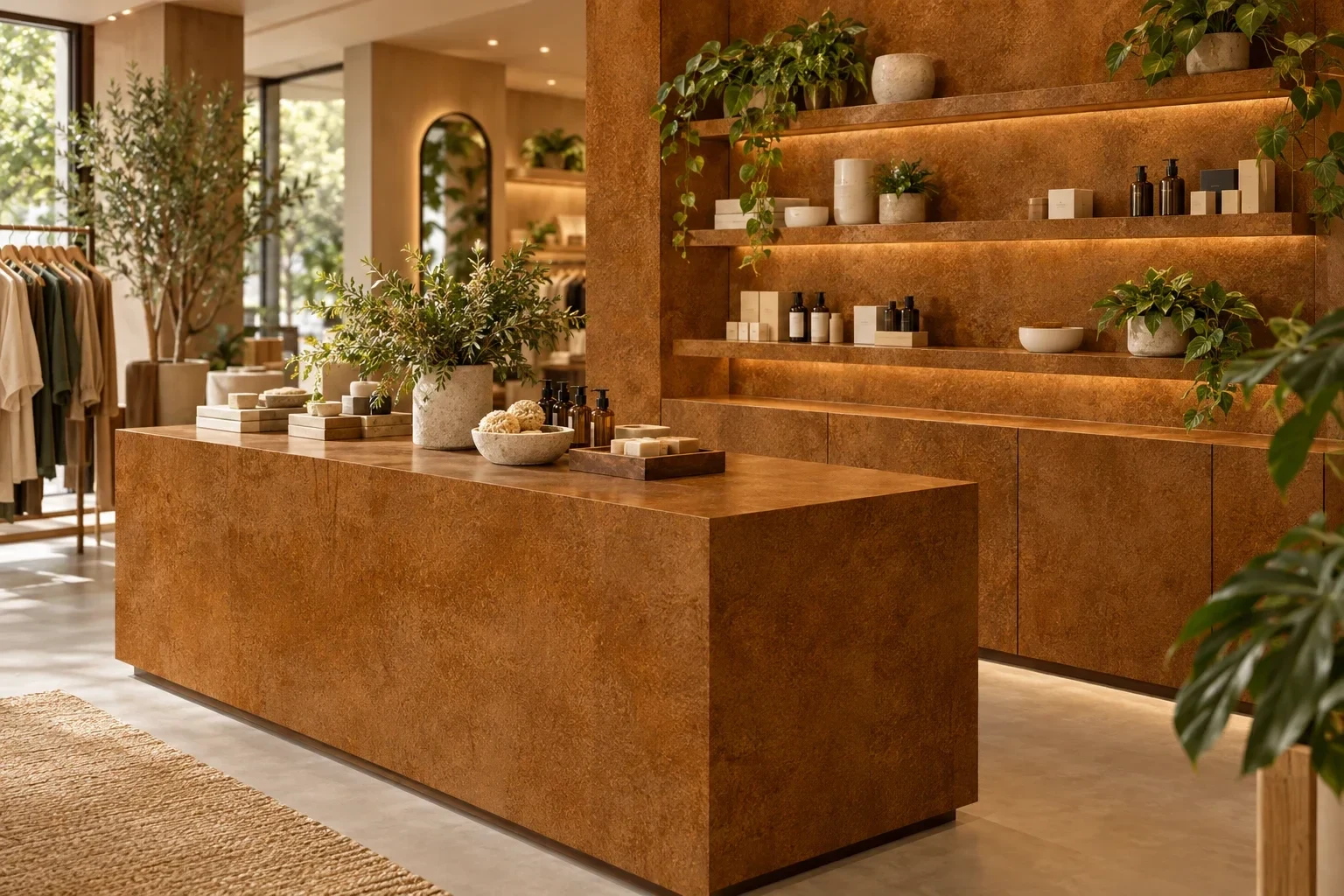
- Choose High Resolution Digital when the face needs project-specific graphics, corporate identity, artwork, or environmental communication.
- Choose Abstracts when the face needs a specified decorative look, such as stone, metal, textile, leather, or geometry, across repeatable components.
- Use a decorative pattern as the field finish and reserve custom digital imagery for high-visibility identity moments, such as a reception front or wayfinding feature.
- Confirm finish and specification availability by individual High Resolution Digital pattern, and confirm finish availability by Abstracts pattern.
For project managers: For a branded workplace package, issue the artwork, desired finish, surface locations, and sheet layout requirements together for review. Custom imagery should be checked at the intended viewing distance as well as close range.
Abstract, textile, leather, geometric, and woodgrain looks
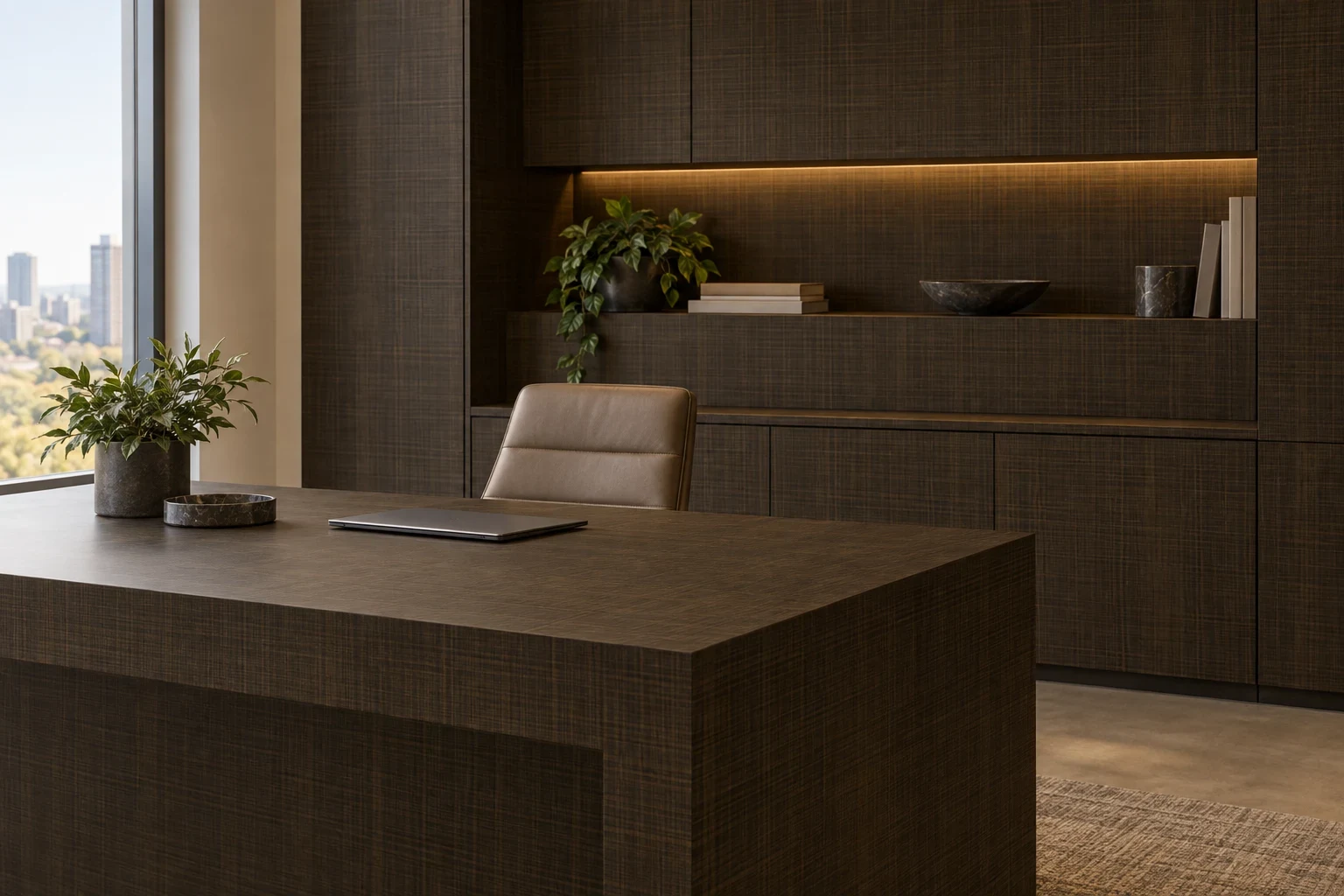
The Abstracts collection gives designers a way to build contrast through pattern character rather than relying only on color. Stone and metal looks can bring a material reference to a reception counter or break-room casework. Textile and leather-inspired patterns can add visual softness to furniture and storage faces, while geometric patterns bring controlled rhythm to larger millwork runs.
For blue-forward accents, Lab Designs PA140 Rebel Blue uses layered marks, tonal variation, and restrained visual movement. Lab Designs PB030 True Blue Fabrique offers the same blue-toned abstract character. These patterns can give a reception, collaboration area, or amenity space a distinct surface identity while remaining suitable for horizontal or vertical interior use.
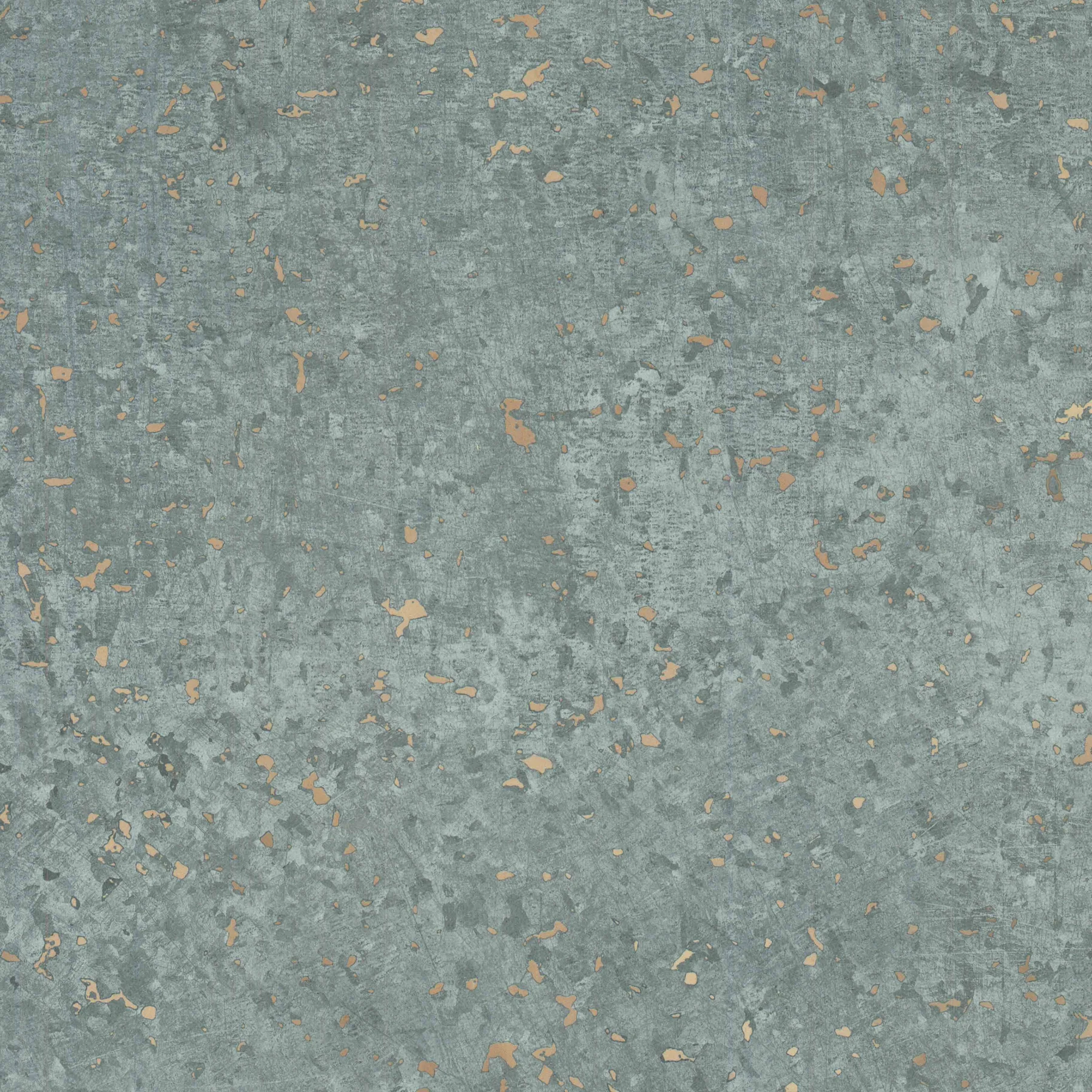
For a more structured reading, Lab Designs PB001 Main Stream Grid uses structured lines, repeated forms, and controlled visual rhythm in balanced neutral and mid-tone hues. It can help organize a field of cabinet fronts, workstation storage, or a conference-room credenza without introducing a strongly directional installation.
Textile and leather references bring a different kind of surface depth. Lab Designs PB050 Blueberry Strand has fine interlaced lines and softly irregular woven detail. Lab Designs PB065 Croc O Dile has organic grain, shallow tonal creasing, and tactile visual depth. Both use balanced neutral and mid-tone hues.
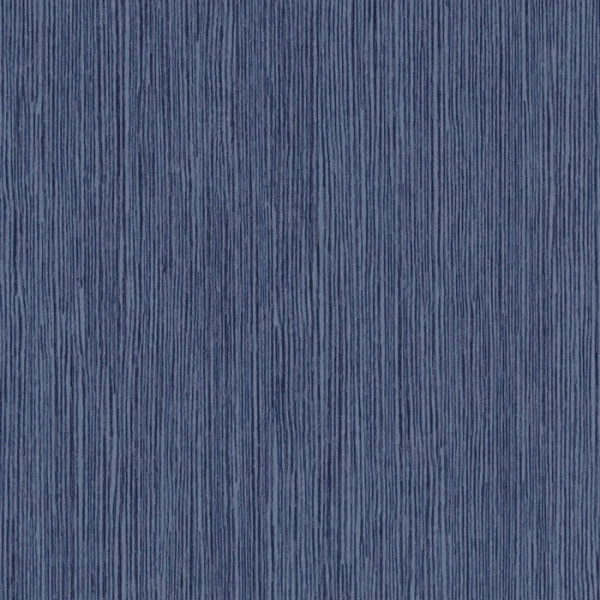
Abstract patterns can also work as quiet fields. Lab Designs DP002 Hill Side and Lab Designs DP004 Lost City are balanced neutral and mid-tone abstracts with layered marks and tonal variation. Lab Designs DP006 Grey Pillars is a gray-toned abstract, while Lab Designs DP007 Blue Pillars is blue-toned. For a woodgrain counterpoint, Lab Designs DW305 Ignited Brown Wood has brown tones, natural grain movement, and layered tonal variation.
For millworkers: Plan panel breaks and edge details with the selected pattern in hand. On long cabinet banks or feature panels, review how tonal variation, repeated forms, and grain movement will read across adjacent fabricated components.
Specification comparison: sheets, grade, finishes, and performance
Both collections are High-Pressure Laminate in a 4' × 8' nominal sheet format, with a 0.9 mm postforming grade identified for each collection. Abstracts is a broad set of decorative patterns; High Resolution Digital provides the additional capability of custom printing. The appropriate choice depends on whether the project calls for a preselected decorative design or project-specific imagery.
- Material: High-Pressure Laminate (HPL)
- Design Style: Abstract, stone, metal, textile, leather, and geometric patterns
- Nominal Sheet Size: 4' × 8' (48 1/4" × 96 1/4")
- Grade: 0.9 mm postforming grade
- Finish: Texture on most patterns; select patterns also in High Gloss or Super Matte*
- Fire rating: ASTM E84 Class B as standard (flame spread 26, smoke developed 80); Class A fire-rated add-on available for every design, including IMO-certified marine laminate
- Material: High-Pressure Laminate
- Print Resolution: Up to 1200 dpi
- Nominal Sheet Size: 4' × 8' (48 1/4" × 96 1/4")
- Grade: 0.9 mm Postforming Grade
- Available Finishes: Satin and Gloss*
- Custom Printing: Graphics, logos, branding and unique imagery
- Performance: Scratch, impact and moisture resistant
For both collections, the listed fire rating is ASTM E84 Class B as standard, with a Class A fire-rated add-on available for every design, including IMO-certified marine laminate. The listed wear resistance is over 400 Taber cycles for horizontal grades under NEMA LD3; pearlescent designs are listed at 100 cycles and for vertical use only. Verify the specific design, finish, and project requirements before finalizing a specification.
For architects: Include the required fire-rating condition and the intended horizontal or vertical application in the finish schedule. Pearlescent designs are listed for vertical use only, so the selected pattern and location need to be coordinated before release.
Fabrication, substrate, and care coordination
For Abstracts, allow 5–7 days before fabrication for acclimation and maintain a fabrication temperature of 60°F–90°F. The collection calls for laminate to be applied to an appropriate substrate. Its listed installation direction is concise, but fabrication coordination is still essential: establish the selected pattern, finish, substrate, edge condition, and panel layout before production begins.
The Lab Designs technical data sheet published for DP007 Blue Pillars states that Lab Designs Laminate can be bonded to plywood, MDF board, HDF board, and particle board. It directs installation in conformance with basic techniques outlined by NEMA LD-3 for high pressure laminate or as recommended by the adhesive manufacturer. The same sheet recommends balancing laminate adhered to a substrate with an equally thick Lab Designs Phenolic backer to help keep finished boards flat.
For installers: Confirm the substrate, adhesive system, balancing approach, edge treatment, and panel dimensions before fabrication. Provide sufficient ventilation and dust collection when cutting material, as directed in the Lab Designs technical data sheet for DP007 Blue Pillars.
The Lab Designs care and maintenance sheet included with DP007 Blue Pillars directs routine cleaning with a soft damp cloth and mild detergent, followed by a warm-water rinse and drying. It says abrasive cleaning products or abrasive pads will damage the finish and recommends testing cleaning products on a concealed spot before full-surface use. Do not leave hot items directly on laminate surfaces.
A planned maintenance note helps workplace teams protect the selected finish after occupancy. Give facilities staff the applicable care guidance with closeout documents, particularly where laminates are used on shared tables, café casework, and heavily used reception surfaces.
Review samples and get a Roos quote
Physical samples are recommended before specifying Lab Designs Abstracts. They are particularly important for designs with tonal variation, metallic effects, woven detail, or a finish whose appearance changes with viewing angle and lighting. For custom digital work, also review supplied artwork and the intended finish before final approval.
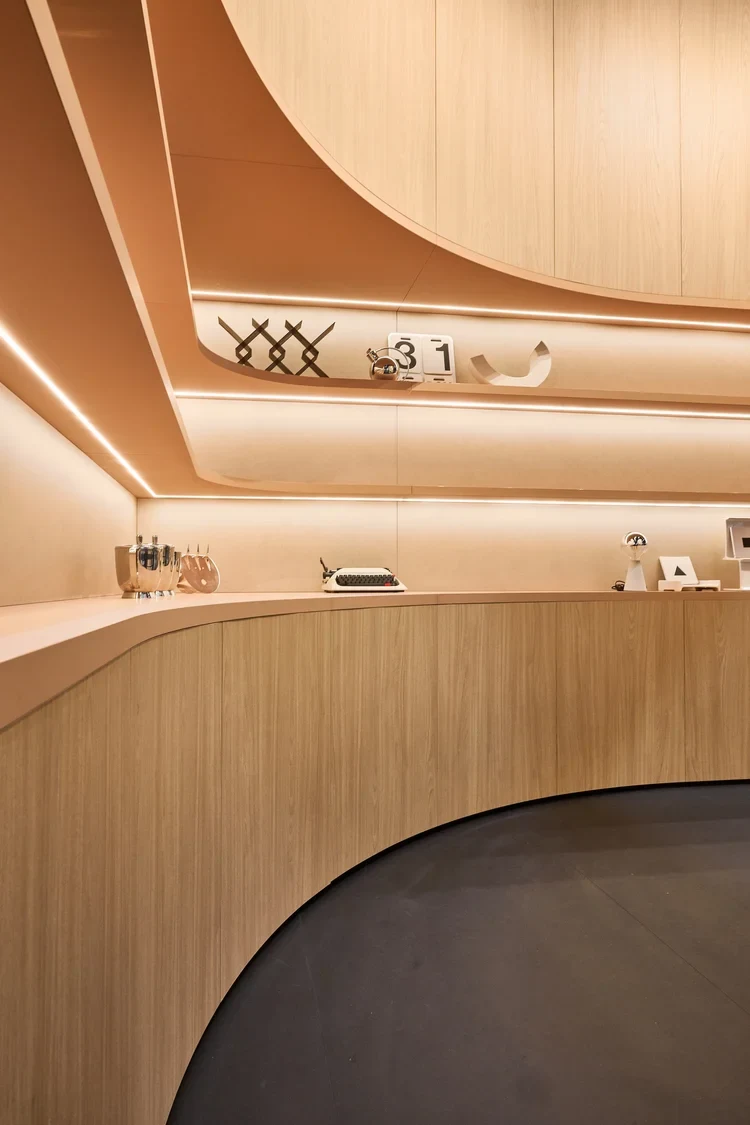
- Request the decorative patterns being considered alongside adjacent woodgrain, solid, metal, or upholstery materials.
- Review samples in the lighting planned for the reception area, meeting room, work café, or open office.
- Note the intended location as horizontal or vertical and identify the desired finish where options are available.
- For High Resolution Digital, identify artwork, logo, graphic, or unique imagery requirements early.
- Share the selected samples and fabrication requirements with the millworker before release.
For project managers: Request samples early enough to review pattern, color, and finish with the full finish palette. Roos can help assemble a focused material set and prepare a project quote after the scope and selections are defined.
Use Order samples to start a physical sample review. For a commercial interior quote or assistance comparing High Resolution Digital and Abstracts for a specific application, Contact Roos.


